Home > a taste of mewar must try rajasthani dishes at kesar bagh palace
A Taste of Mewar: Must-Try Rajasthani Dishes at Kesar Bagh Palace
Mewari food does not hide behind complicated presentation. It builds flavour through heat, time, ghee, dried spices and careful cooking. The cuisine grew around Rajasthan’s climate and the need to create satisfying meals with ingredients that travel well and keep well.
At Kesar Bagh Palace, we bring that spirit to the table while keeping the dining experience comfortable for modern guests. The aim is simple: cook regional food with respect for its ingredients and serve it in a setting worthy of a heritage stay.
Dal Baati Churma: the meal that defines Rajasthan
Baati needs patience. We shape the wheat dough into firm rounds and cook them until the outside develops a deep roasted character. We finish them with pure ghee. The ghee should soak through the baati without turning it into a greasy mess.
Dal brings the contrast. We cook lentils until tender, then build the tempering with spices and aromatics. Garlic chutney adds sharp heat. Churma completes the plate with a sweet, crumbly finish.
When we serve Dal Baati Churma, we do not treat each item as a separate dish. The meal works because the smoky baati, seasoned dal, hot garlic chutney and sweet churma balance one another.
Chef's Tip
- Break the baati by hand and add ghee while it is still hot.
- Taste the dal before adding extra chutney. The garlic heat should support the lentils, not cover them.
- Eat churma in small bites alongside the savoury parts of the meal.
Laal Maas: heat, smoke and slow cooking
Laal Maas carries the heat of Mathania chillies, a chilli associated with Rajasthan’s Mewar-Marwar culinary tradition. The colour can look dramatic, but good Laal Maas is not simply a contest of heat.
We build the base with whole spices, aromatics and chilli, then let the meat cook slowly so the sauce develops depth. Slow cooking matters. It softens the meat and gives the spices time to move into the cooking liquid.
The best bowl has a clear balance: the chilli arrives first, the meat remains tender, and the spice stays present after the bite without becoming harsh.
Gatte ki Sabzi: technique in a simple form
Gatte start with a gram-flour mixture seasoned with spices. We shape the mixture, cook it until firm, cool it and cut it into pieces. The gravy then does the rest.
A well-made gatte should hold its shape but remain tender enough to absorb the gravy. The sauce may use curd, spices and aromatics, with the exact balance changing from kitchen to kitchen.
This is one of the dishes where technique matters more than decoration. Get the dough wrong and the gatte become hard. Cook the gravy carelessly and the curd can split.
Ker Sangri: the desert pantry on one plate
Ker and sangri come from Rajasthan’s dry landscape and have long been valued as ingredients that can be stored and cooked when fresh vegetables were scarce. Before cooking, the dried ingredients need careful cleaning and soaking.
We then cook them with oil, spices and the sour, earthy notes that make the dish so distinctive. Ker Sangri works well with breads because the dry-style preparation carries concentrated flavour.
If you have never tried it, ask for a small serving with your meal. It is one of the clearest ways to understand how Rajasthan’s climate shaped its food.
The spices behind Mewari cooking
- Mathania chillies: valued for colour, aroma and controlled heat when used well.
- Cumin: adds an earthy, warm base to many savoury preparations.
- Coriander: rounds out spice blends with a fresh, citrus-like note.
- Turmeric: brings colour and an earthy background note.
- Garlic: adds depth and sharpness, especially in chutneys and meat dishes.
- Carom and other local spice accents: used selectively to add warmth and digestive character.
Regional cooking is not about throwing every spice into the pot. We choose a few, toast or temper them at the right stage, and let the main ingredient remain clear.
Heritage dining at Kesar Bagh Palace
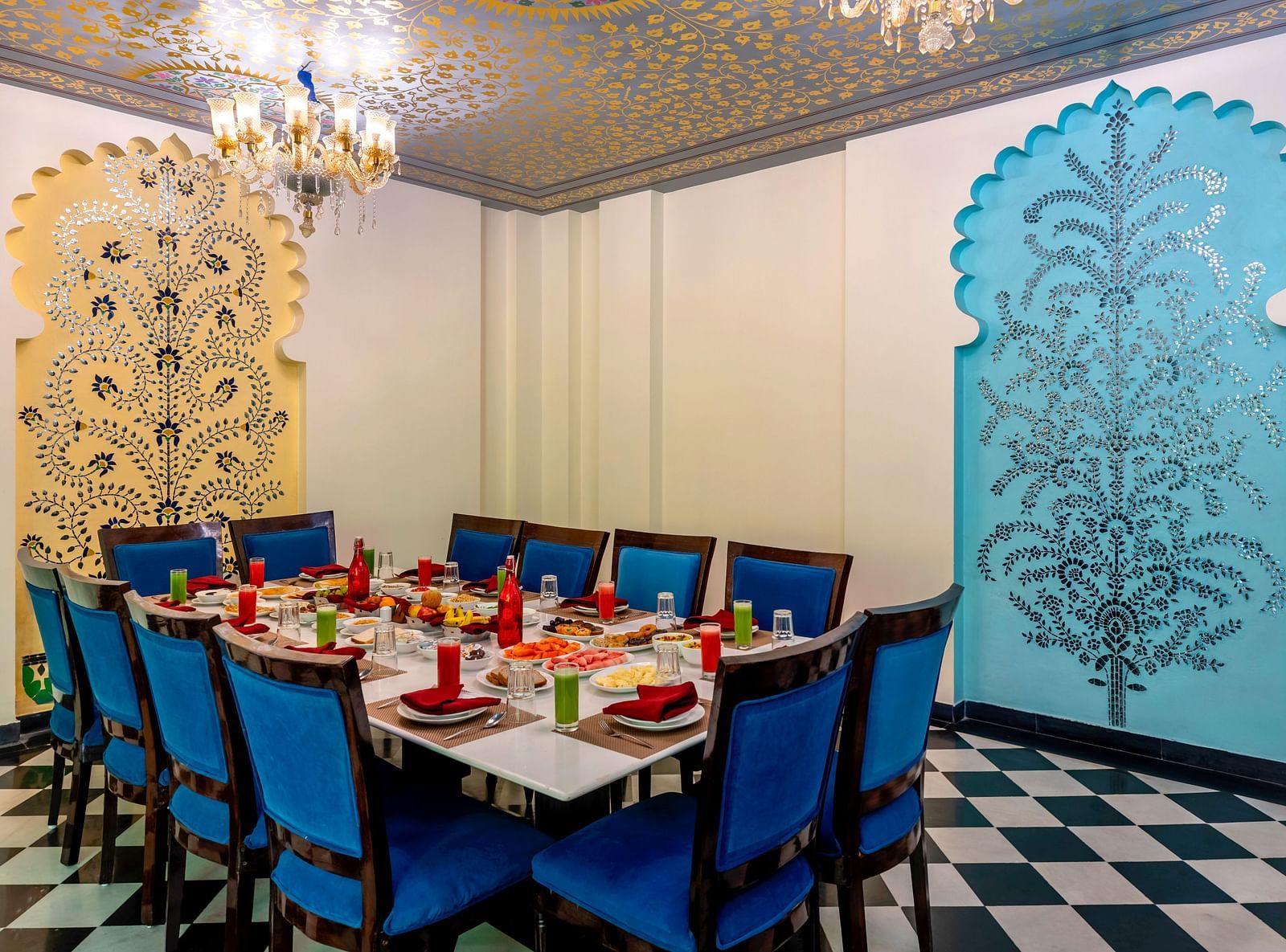
Our multi-cuisine restaurant pairs regional food with a heritage setting. Teakwood accents, hand-painted wall motifs and crystal chandeliers create a formal dining room without making the food feel distant.
For guests staying at the palace, dinner can also become part of the evening rather than a separate outing. Choose a Mewari meal, take your time, and let the kitchen serve the food in courses that suit your table.
Room Service, but Make it a Ritual
Our 24/7 room service gives guests another way to experience royal dining. After a long day of sightseeing, you may not want a formal restaurant table. You may want dinner brought to your suite, a hot plate of regional food, and an unhurried evening.
Order a selection, clear a little space, and make the room your private dining table. For families, this can be especially comfortable when children need an earlier meal or grandparents want a quieter evening.
Poolside dining under the stars
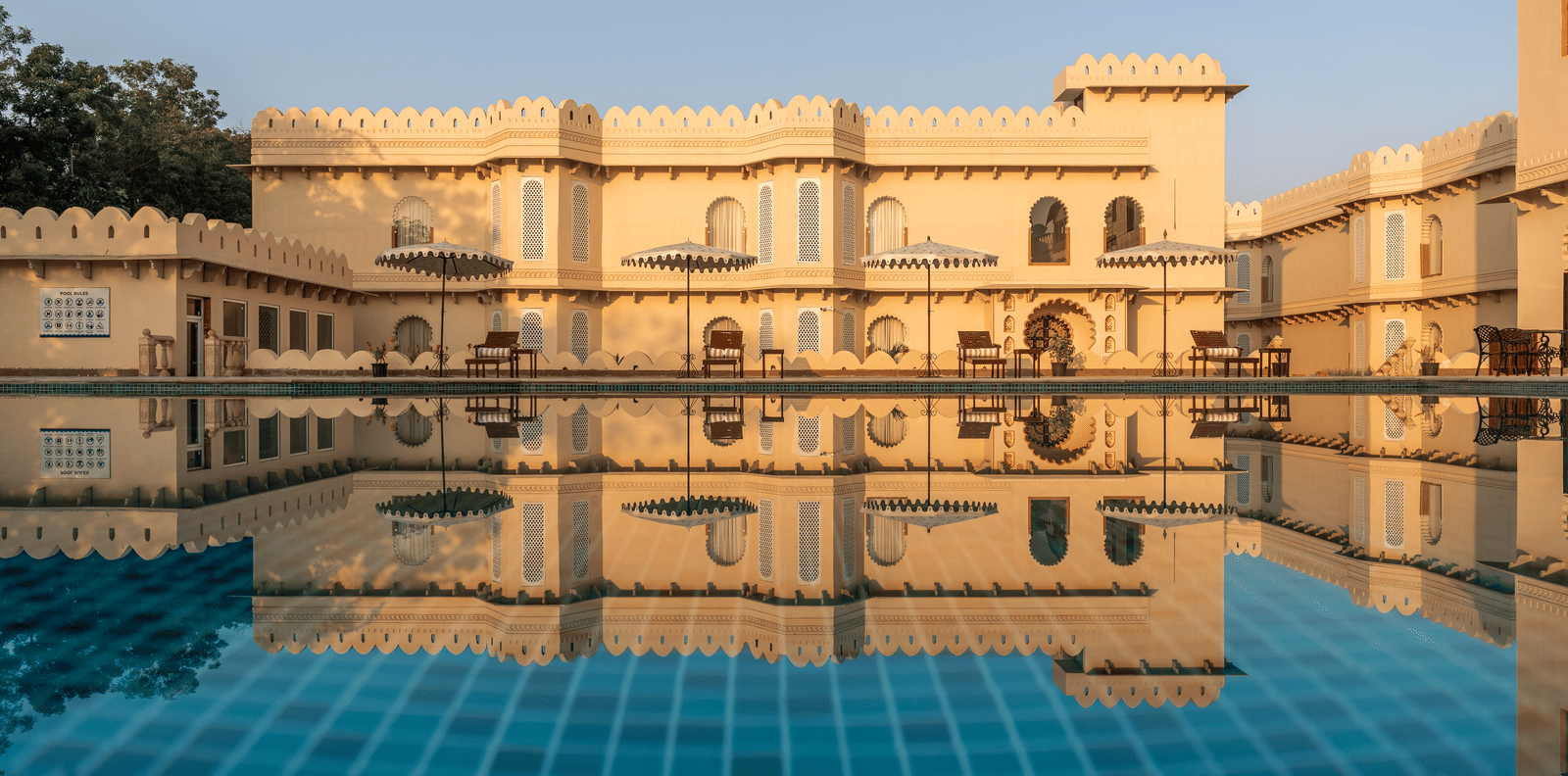
When the weather cooperates, take dinner outside by the pool. Rajasthan’s evening sky gives the meal a different rhythm. Keep the menu focused. Choose a few regional dishes, warm breads and something sweet at the end.
The setting should support the food, not compete with it. A simple table, low light and a plate of freshly cooked Mewari food can create a memorable evening without excessive decoration.
Chef's Tip
- Ask for a regional tasting plate if you want to try several Mewari dishes in one meal.
- Pair rich dishes with a cooling accompaniment rather than adding more heat.
- For a first introduction to Mewari food, start with Dal Baati Churma and Ker Sangri, then move to Laal Maas if you enjoy chilli-forward dishes.
What to order for a first Mewari dinner
- Dal Baati Churma for the classic combination of roasted wheat, lentils, ghee, garlic and sweetness.
- Ker Sangri for a taste of Rajasthan’s dry-land cooking traditions.
- Gatte ki Sabzi for gram-flour dumplings in a seasoned gravy.
- Laal Maas for a chilli-led meat dish built around slow cooking and Mathania chilli character.
- A seasonal dessert or traditional sweet to finish.
The dining experience is part of the stay
For travelers searching for authentic Rajasthani food in Chittorgarh, the goal should be more than finding a famous dish. Ask how the food is cooked. Ask which ingredients are local or traditional. Notice the difference between a dish made quickly and one given time.
At Kesar Bagh Palace, we want guests to leave knowing what they ate and why it tastes the way it does. That is the standard we bring to our kitchen, whether the guest chooses a full Mewari dinner, a multi-cuisine meal, room service or a poolside table.
A final note from the kitchen
Chittorgarh has a strong food identity because its cuisine carries the practical wisdom of Mewar. The best way to experience it is to eat slowly and ask questions. Try the dishes in their proper combinations. Notice the spice balance. Let the roasted, sour, smoky and rich notes develop.
If you are planning a stay around heritage sightseeing, ask our team to help arrange a regional meal at Kesar Bagh Palace. For guests looking for the best dining in Chittorgarh, heritage dining in Chittorgarh should feel rooted in place, not simply decorated to look traditional.